What gun should I get? If I had a dollar for every time I was asked that question, the gals and I'd be living on a ranch out west by now. There's an endless number of blog posts, gun magazine articles, online reviews, and opinions out there on this topic... so why not one more.
As a firearms instructor for almost three decades now... I've had the opportunity to shoot just about every handgun out there including a few shots recently through an SCCY 9mm, a Glock 42, and Remington R51. Now, a few shots of a gun is a great introduction, but when it comes to recommending a gun to someone... I have a simple philosophy... I education, YOU decide.
So with some discussion with my gals, we'll take a look at five of our personal guns for all of you gals to consider for concealed carry. So without any more delay, from our collection... the gals and I recommend you consider three compact pistols including the Glock 26, Ruger SR9c, or Smith & Wesson M&P9 Compact... or for something a bit more slender... consider two compact, single-stack pistols... the Ruger LC9 or Smith & Wesson M&P Shield in 9mm.
Why you ask, well... here are ten things to consider:
1. They are all 9mm... which is an acceptable self-defense cartridge with ammo widely available in many configurations. The ammo is not expensive to practice with and the recoil is controllable for most folks and significantly less than similarly sized guns in .40S&W or .45ACP.
2. All the guns have usable sights with enough of a sight radius (the distance from the front sight to the rear sight) to allow for decent accuracy and precision when acquiring sight alignment and sight picture in a hurry or stressful situation. No little "nubs" on these guns like a Ruger LCP or Kel-Tec 3AT. Additionally, the sights are all replaceable with aftermarket options if you want something different than the stock offerings.
3. They all have a trigger pull that most gals will find acceptable. All are striker fired except the Ruger LC9, which is double-action-only and has an easy trigger pull, but some might find it a bit long.
4. Three of the guns have interchangeable back-straps to allow you to customize the size of the grip to better fit your hand.
5. All of the guns are compact enough to be easily carried concealed without printing through your clothing or they can be carried in a purse... although I don't recommend off-body carry for a number of reasons.
6. All of the guns have slides with spring tensions that are easily cycled by most folks.
7. All will accept and have higher capacity magazines available so you can carry a ten-round magazine in your Glock 26 with a fifteen-round spare magazine from the Glock 19 if you want. Carrying a higher capacity magazine or adding the extended grip floor plate to your magazine for these guns also offers a "pinky perch" for a full grip with most folks.
8. All of these guns are popular enough to have a wide variety of IWB, AIWP, OWB and other holsters from many manufacturers and concealed carry options such as Crimson Trace laser sights available.
9. These guns are available for between $300 and $600 which make them affordable for most folks who want a quality gun that will last a lifetime. It is really hard to find a new, quality handgun under $300 to $400.
10. All the guns have good track records and the manufacturers have excellent reputations for service and repair.
Hey... wait... what about my gun... or that gun... or XYZ gun? There are other guns out there that will work just fine. The Springfield XD Compact and XD-S come to mind... the gals and I just don't own any... but we've shot them... and look at the criteria discussed in the ten things listed for you to consider... there are other guns out there that meet those considerations.
So if you're a gal (or even a guy) and your looking for a gun to carry... from my gals and I to you... Five guns for gals who carry...
Friday, May 2, 2014
Monday, March 17, 2014
Bullseye and combat accuracy... you need both!
My friend and I were out back on our shootin' range putting some lead downrange and the discussion of bullseye verses combat accuracy came up after some recent blog posts out there on the interwebs. I think both are important and I've used a lot of different drills I've found online, but here are some drills I've developed myself. We started out shooting some bullseye targets with our everyday carry guns at fifty feet.
The protocol was to draw and shoot one-round into the black bullseye of the MidwayUSA free, printable pistol target in under five seconds at fifty feet. Repeat this five times. This is a drill to check and enhance fundamentals such as grip, sight alignment, trigger-squeeze, breathing, follow-through. Think carefully about your draw too... and carefully looking and re-holstering your gun.
Next, we did a similar drill at fifty feet... but now you have to draw, aim, and fire one round into the bullseye, strip the magazine (you can drop, we strip), reload and fire a second round into the bullseye... in under seven seconds. Your time does not count, you just have to be under the time-alloted and have EVERY round in the bullseye. Slow and smooth are the keys... and you'll likely find yourself having far too much time at five and seven seconds for these drills.
The next drill we worked on for accuracy was a kind of dot-torture test at twenty-five feet using an International Benchrest Target for 50-yard Rimfire. Loading ten rounds into two of your magazines and then nine rounds and one random dummie round into one magazine, you then mix up the mags so you don't know which one has a dummie round in it.
There are twenty-nine bullseyes on the International Benchrest Target... and you have twenty-nine rounds... put one round in each bullseye circle. Using a shot-timer, like our PACT shot timers, you draw (or from low-ready if you can't draw on your range) and begin firing at the beep. This will involve two reloads and one failure-to-fire malfunction clearing. This is about accuracy under pressure... so add five-seconds (ouch) to your time for each miss. Try to complete the drill, shooting clean, in less than sixty seconds as an initial benchmark or goal.
After some fundamental refreshers with my accuracy drills, I like to mix it up with some combat-accuracy drills... and I don't shoot with just any Tom, Dick, or Harry! Our Tom, Dick, and Harry are nicknames for our three one-quarter sized armor-plate targets from Arntzen Targets. We have some full-size targets from Arntzen, but I figure the quarter-sized targets force me and the gals to be better with our shot placement... we're not going for bullseyes... we're shooting for incapacitating hits on people... for combat - or as we call it - self-defense accuracy.
I won't run through our various drills because we have some regular ones to check our progress and we constantly visualize and set up various scenarios to challenge ourselves. We always try to incorporate some reloads and malfunction clearing while using cover and concealment. Shooting and moving are done to raise our heart-rates and stress... all while under the timer.
There are a lot of good drills and practice scenarios from far more skilled and smarter folks then me... but these are some of the things we do... to keep up our skills... because... Bullseye and combat accuracy... you need both!
Monday, February 24, 2014
Buck Knives X-Tract
The second knife I ever had as a kid growing up was a Sabre scout knife... or camping knife as we called it back them. That was a time when a child having a knife didn't result in a school lock-down and SWAT showing up. There are updated versions of that ol' scout knife available today... and there are some variations that have evolved since then.
Last year for my daughter's graduation, I had given her several items to mark the occasion, including a couple of knives. The one knife was for every-day-carry in a collegiate environment where knives are weapons and weapons are not allowed or limited to knives with a blade less than three-inches in length. The one knife I gave her was a blue Buck Knives X-Tract... as blue is her favorite color.
The Buck X-Tract is an inexpensive knife-slash-multi-tool that functions fairly well as a locking, thumb-opening knife and has some decent quality tools built in too. For Christmas, I received a twenty-five dollar gift card to Bass Pro Shops... and since I didn't need anything in particular... and they had red Buck X-Tracts on sale for about that amount, I picked one up for myself. Red may not be as tacti-cool as black, but it sure is easy to see when you drop it in the gravel or dirt out by the barn or in the woods.
While most Buck Knives are made right here in the good ol' United States of America... this one is made in China to Buck's specifications. It appears to be well built, as does the one my daughter has, and the knife blade has kept it's edge so far with regular use over the last couple of months. The thumb stud lets it flip open easily without any play in the pivot and locks in place tightly.
The pliers slide out and lock in place. The spring loaded pliers makes using them really easy and the wire cutters are very effective in my experience so far. There is a quality, slotted screw-driver blade and also a Phillips head that slides out the opposite direction. The bottle/can opener also locks in place and has been handy to open a can of tuna or soup at work. There's a place to attach a lanyard too.
This knife/multi-tool is a bit thick to be carried in the average pocket and it doesn't have a clip... so Buck includes a black, molded nylon sheath that has a snap closure and has loops for both a belt and MOLLE attachment. I know clip-knives are all the rage these days, but this ol' country boy carried a Buck 110 Folding Hunter for a couple of decades in a leather belt sheath, so I still appreciate a well-made belt sheath.
Now I must admit my bias... I've owned and used Buck knives for over thirty-five years now and they've always been a quality product, but more importantly, they're made by quality folks. The Buck family are Christians who operate their business with integrity and beliefs that ultimately led them to leave California for greener grass in Idaho. Every knife comes with a statement of their beliefs and has the Gospel of Christ for anyone who needs Him. As a Christian, that is something I can support and they admit they are not beyond mistakes, but they will make it right for you if they do mess up.
So if you're looking for a knife with some tools or an updated replacement for that old scout or camper knife...and you don't need a cork screw... for about thirty-five bucks or less on sale... you can pick up a... Buck Knives X-Tract
Monday, February 17, 2014
Training, Practice, and Conditioning for those of us who don't operate...
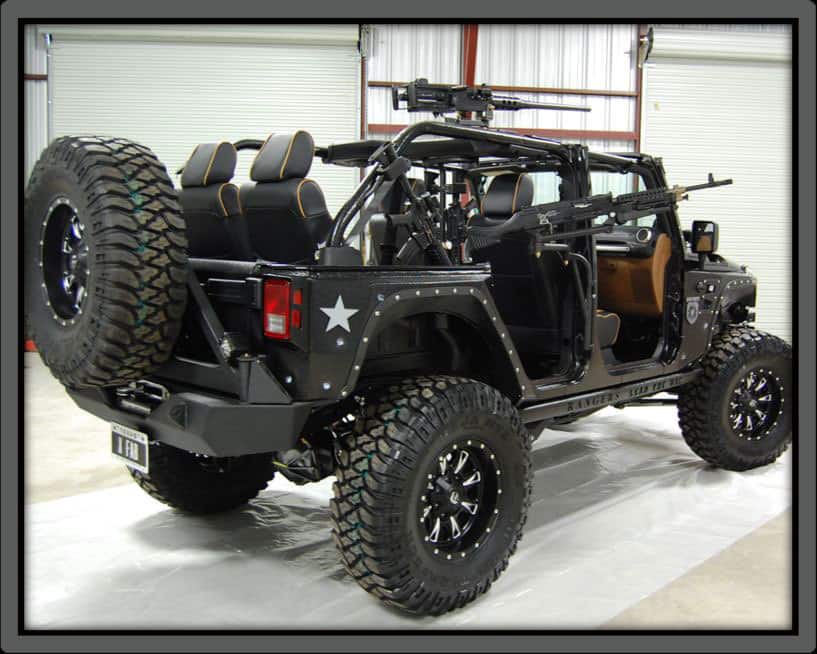
"Bro, do you even operate?" says the bumper sticker of a local tactical wanna-be type... on the back of his jacked-up, never-seen-mud, black tactical Jeep Wrangler Rubicon with all the subtlety of an M1 Abrams tank in a McDonald's drive-thru during lunch hour. Fortunately, he carries his cocked and locked .45 almost out of sight in a Serpa holster tucked under his black 5.11 shoot-me-first vest.
Now I probably shouldn't pick on folks and their lifestyle choices too much, because most would not likely make the choices the gals and I make, but when it comes to guns, prepping, and self-defense... I'm guessing there are a lot more of us average, non-operator types out there. I worked in law-enforcement for a few years a couple of decades back, but the gals and I have day jobs as educators that have nothing to law-enforcement, SWAT teams, security contractors, or operating in any way, shape, or form.
The gals and I are not going to be buggin' out with hundred-pound ALICE packs on forty-mile hikes anytime soon, but that doesn't mean that we want to give up our God-given rights, liberties, or freedoms. With that in mind, we do like to budget some training, practice, and conditioning into our daily lives to help with self-defense and family protection needs.
I don't have four hours a day to lift, run, dry-fire, shoot, prep, hike, prepare food, read, study, train, and pay for it all. Rather than just give up without even trying, I do try to spend some time every day and throughout the year, budgeting time and funds to train, practice, and condition to keep my EDC skills, abilities, and mindset on a slow and steady, but continuous pace of improvement.
Training is important and to me, that involves learning from others. You need instruction from others with better or different knowledge to help you improve or modify your knowledge and skills. We try to combine efforts when possible like last year when the gals and I spent a three-day weekend together at TDI's Handgun Levels I, II, and III course as a family activity and mini-vacation. We do try to get to training at least two or three times each year... definitely at least one firearms training course... sometimes more, but sometimes it involves medical training or prepping-related training.
Sometimes my training is active and other times it is passive. I spend thirty minutes a day, three times each week, working out on a Schwinn Airdyne and often use that time to watch training DVDs or other shows and DVDs that increase my knowledge and improve my mindset. You can accomplish two things at once to save time and be more efficient in our busy lives. I then try to review and incorporate what I learn in my practice routines. I've watched some of our training DVDs several times each over the years, but don't think a DVD can completely replace the training and feedback of a live instructor... balance is the key.
Practice involves applying your training and becoming proficient with what you've learned. It doesn't necessarily take hours. Every day when I take my EDC gun, knife, and flashlight off at the end of the day... I practice for at least a few minutes. I empty and clear my gun... cycling the action and checking it three times to make sure it is empty. I practice drawing and dry-firing five to ten times from concealment with a practice reload on the last draw and dry-fire using empty magazines. On Sundays, I do everything with my off-hand. When I'm done, I reload my gun with ammunition, top off the magazine (you do top off your magazine, don't you?), and get it ready for use.
Fortunately, we have our own shootin' range out back and so at least a couple of times each week I can walk out and put a few rounds through my guns. I don't necessarily shoot a lot, maybe a magazine worth, maybe two or three magazines with two to six rounds in each to practice shooting and reloading with both my strong-side and weak-side. Maybe an occasional transition from my handgun to carbine and vice-versa since we keep both our 9mm's and AR's handy for home-defense work. I also usually practice drawing and opening my EDC knife a few times with one hand and then the other hand each day.
Conditioning involves getting your body and mind in shape for practice and training. I'm not in great condition when compared to athletes and real operators. I've managed some significant weight-loss in recent years and hope to lose more, but for now my conditioning consists of taking this half-century old body to the gym for weight-lifting three days each week and spending thirty minutes on the Schwinn Airdyne three days each week. I realize that's not at Navy SEAL levels, but it's what I have time to work into my life with all my other commitments and I'm able to maintain it.
Integrating conditioning into other everyday life activities is important too. I exercise my hands and grip during my hour-long commute to work. I try not to park in the closest space to the door and be random in my parking and routines. Taking the stairs instead of the elevator is standard for me these days while walking for short trips rather than taking the car or truck is now the norm for me. I also practice several basic, physical self-defense moves three times each week to make sure they are ready when needed.
Preparing and conditioning for the proper mindset is also important. To condition my mind... I enjoy reading, studying, and visualizing. I can visualize every step and part involved with taking apart every single firearm we own in detail. I visualize threats and self-defense scenarios I've read about, seen on TV or Youtube (yeah, admit it... you watch the videos and dashcam vids on youtube too), and encounter in my every day life.
I try to think through each scenario to evaluate my awareness, preparedness, opportunities, capabilities, potential actions, and possible outcomes. I also try to reduce my daily stress and achieve some inner peace by conditioning my mind with some daily Bible reading and devotions. Maybe mediation or some other mind-relaxing technique works for you, but don't underestimate the harm and fatigue mental stress can cause you. Conditioning your mind is as important as conditioning your body.
So when it comes to training, practice, and conditioning... what are you willing or able to do? Are you overestimating your capabilities... most of us do. There is a reason our Bug Out Bags are kept at thirty-five pounds or less... because as Dirty Harry said, "A good man knows his limitations." I think it's also important to include your family and partners in your training, practice, and conditioning... at least as much as you can or as much as they are willing and able. Let's face it, the fastest reload you'll ever see breaking into my house is my redhead reload... that's when my gal continues steady fire into your center-mass while I reload.
I think the key is to do something... and I recommend starting and increasing incrementally. Chances are if you start next week trying to spend three hours each day when you're doing nothing now... you will fail. You will likely be better off committing fifteen minutes a day and gradually increasing your time... staying consistent and dedicated to an attainable goal, but that doesn't mean you shouldn't push yourself occasionally.
So, with all that being said... WHAT ARE YOUR THOUGHTS AND SUGGESTIONS about... Training, Practice, and Conditioning for those of us who don't operate...
Monday, February 10, 2014
Hothands Hand Warmers by HeatMax
We've had one of the colder winters this year that I can remember in recent years. After about two hours on the outdoor shooting range this past Saturday with some good folks taking my NRA Basic Pistol/Ohio CCW course with a high temperature in the twenties... everyone was ready to thaw out back in the classroom.
Gloves for those who don't have the right kind for shooting or aren't used to shooting with gloves on... can be a hassle... or even a safety hazard... so many just shot without gloves. To help my students out with the cold hands on cold steel and polymer guns, I provided some Hothands Hand Warmers.
You can pick these products up in various shapes and sizes for hands and feet, but the gals and I usually keep a pretty good stock of the Hand Warmer variant. You just tear open the foil packet exposing the inner packet to air... shake it around a bit to expose the packet's ingredients to the the oxygen in the air... and it heats up and keeps generating heat for up to ten hours.
We've used them for years and while I've had them keep generating heat for several hours... I timed it one time in the hunting blind waiting on a big buck that never came by and it ran out of heat after about six and a half hours. They do generate heat, so if you drop a pair in your boots, do it on the outside of your socks or you'll find your feet getting too hot... almost burning hot.
I've used battery-powered warmers in boots and gloves over the years, but the ease of use, low cost, and safe-to-use nature of these warmers make them convenient and reliable. If you need to keep your extremities warmed on a bitter-cold day or if you gal just needs to keep her hands warm... you might consider keeping some of these handy... Hothands Hand Warmers by HeatMax
Monday, February 3, 2014
Ruger LC9 with Crimson Trace Laserguard
Shooters in the world of concealed carry are much like Goldilocks... looking for that perfect handgun that isn't too hot or too cold... too big or too small. It's a hard combination to find... and the right solution for you doesn't necessarily fit everyone else.
The gals and I have had some significant time and over a thousand rounds now with our Ruger LC9 pistol with Crimson Trace Laserguard, so I figured it was about time share our experiences. First, it has been completely reliable with every 9mm ammunition brand and configuration we could run through it.
Unlike our Ruger LCP, this little gun has usable sights. The rear sight did come loose while my buddy Matt, from Jerking the Trigger, and I were putting some rounds through it last year... but a little Loctite on the set-screw and the problem was solved. The dove-tailed sights allow for easy replacement with aftermarket sights.
I'm a fan of shooting dots... and it's pretty easy with the Ruger LC9. The three shots you see were one-shot per dot at twenty-five feet, off-hand... so this gun is more than accurate enough for a typical, everyday carry self-defense gun. It will work as your primary carry gun or your Back-Up Gun (BUG).
The Crimson Trace Laserguard is everything I've come to expect from Crimson Trace. It's ergonomic, intuitive operation make it easy to use and completely reliable in a stressful situation. It mounts seamlessly on the gun and our LC9 came straight from Ruger with the laser.
My daily carry gun is usually one of our Ruger SR9 or SR9c pistols, so it's natural to compare the LC9 to them... size-wise. Like the Ruger SR9 series, the LC9 has a "dehorned" feel to it right out of the box and is significantly slimmer. You can also add the included finger-extension base-plate for the magazine for larger hands... and Ruger also offers an extended 9-round magazine that gives you two more rounds than the standard 7-round magazine and works great for a reload too.
Our Glock 26 has a similar side-profile, but it's a lot "blockier" and is definitely wider and heavier... but it also gives you 10-rounds like the Ruger SR9c.
My gal loves the size, slenderness, and feel of the Ruger LC9. For me, it's a bit small for my larger hands which makes the finger-extension base-plate on the magazine a terrific accessory. Recoil is very manageable for both her and I compared with our Ruger LCP pistols, which can be a bit "snappy".
While a terrific and reliable little gun, the LC9 does have an Achilles heal. The trigger pull weight is about right for a concealed carry gun, but WOW... it is a long, long trigger pull to get to the clean break and distinct reset. It feels like a longer trigger-pull than some double-action revolvers we have. There are some companies out there, like Galloway Precision, already offering fixes, but I haven't tried one yet.
This is a great little gun, reliably eatin' any ammo we could feed it. Accurate and controllable, all works well except the long, long trigger-pull. Well wait a minute, you shot very accurately with it at twenty-five feet... yes, but it still throws me off once in a while when running against the clock. For everyday carry though, or a BUG, this works better size-wise for me than the Ruger LCP, is a real 9mm, and has usable sights... plus a Crimson Trace Laserguard.
We have a Smith and Wesson Shield on order, so it will be interesting to compare the two guns down the road... and the new Glock 42... well, if I'm carrying a .380ACP... the Ruger LCP is the choice for me. For now, our Goldilocks gun is a little small for me, but just right for my gal... who really likes the... Ruger LC9 with Crimson Trace Laserguard...
Monday, January 27, 2014
My gals hate pink...
When I first met my wife back in the 80s... the days of shoulder pads... and not just for football players... stirrup pants, leg warmers, and big hair... like Barbara Mandrell... my gal was country when country wasn't cool. She's always worn a little make-up, but not much... and she's always had a natural beauty to her and a mind of her own... so she never really worried much about styles and trends.
She's as comfortable in jeans and camo as she is dressing up for a nice dinner out and about. She does enjoy the outdoors, shooting, and riding motorcycles, but still likes to kick back, throw on a movie... and paint her nails. A fiery redhead with sass, one thing I learned early on... pink is not this gal's color... it's purple.
Then came my lil' gal who's now off to college... and like her momma... she's her own woman too... in blue. Truthfully, I think either one would hate their favorite color if it was the norm... just because they don't like to be pegged in societal norms. They both like to go their own way... intelligent, beautiful, independent gals with their own minds and their own ideas.
Anytime we're in a gun store or at one of the local dealers and one of the gun gurus on the other side of the counter is pushing a pink gun on some gal... or worse, some guy buying it for his gal... my wife is always about half ready to slap someone upside the head. Gals, I guess it's OK if you like pink, but my gals will have none of it.
Yeah guys, I know... a blue gun or a purple knife really doesn't blend in well while huntin'... but my gals remind me that animals are color-blind and that ninety-nine percent of the time we're not trying to evade the zombie apocalypse... but, honey... someday we might need to evade zombies and that purple... SMACK! She tells me that we'll camo it with Krylon when we have to... that's my gal!
Truthfully... black, camo, and molle gear doesn't really blend in with most environments that the majority of us encounter every day anyway. So... gun companies and others... a bright blue AR or a purple Ka-Bar TDI knife... not lavender or violet... but a real purple one (my wife's wish list)... would go well 'round here.
What can I say... My gals hate pink...
Subscribe to:
Posts (Atom)