Showing posts with label Philosophy. Show all posts

Sunday, March 12, 2017

Daylight Savings Time... our semi-annual readiness check.

Well, I'm still looking for that hour I lost last night, but we should get it back next fall. Twice a year... here in Ohio... we change our clocks for Daylight Savings Time. While the advantages gained are debatable... it's our semi-annual reminder to check our stuff. What stuff you ask, well... a lot of stuff... it's been a busy day(s)!


First off, this weekend we shot our Every Day Carry (EDC) ammunition and replaced it with new.  This has been discussed in the past with "Five reasons to shoot your Every-Day-Carry Self-Defense ammunition!" It's also a good time to check your cartridges for any set-back you might be experiencing.  We rotate the round we chamber each time and haven't really experienced a problem with bullet set-back in the cartridge because we don't re-chamber the exact same round over and over and over every single day.

We also do a lot of other checking this weekend. We check our Bug Out Bags (BOBs) and Get Home Bags (GHBs). We update anything that needs it, rotate out expired provisions if necessary, and add in anything else we've decided to at that time.

We also check batteries... and replace if necessary... in radios, flashlights, weapon lights, red-dot optics and other devices well beyond the typical smoke alarms and carbon monoxide detectors found in most homes. The portable generators are started and checked... annual maintenance like oil changes, etc. happens each fall when the clocks change.

Have you checked your vehicles over... checked the air pressure in all five tires...yes five... that spare won't help if it's flat too. How about your prepping supplies... food stores... like the pantry to make sure any close to expiring goods are moved up front in the rotation and expired goods are discarded. Medical supplies and medicines are also checked, updated, and/or discarded as needed.

How about some personal identity security? We're no cyber saints around here, but we do update our passwords on all our accounts at least twice each year... when the clocks change.

The list could go on and on... and it takes us several days to go through everything... and that's why we actually have a checklist... you should too... and maybe you should do like us... because we make... Daylight Savings Time... our semi-annual readiness check.

Tuesday, December 15, 2015

We live with guns...

Our dogs are part of our family. I've always said that we don't own them, we live with them. They live in our home and our lives fully.  Recently, our friend Melody Lauer made a comment on Facebook about living with guns. Our family is the same with guns, they are an integral part of our everyday lives for self-defense, fun, sport, hobbies, reading, learning... just about whatever.


The one gun safe is in our kitchen right next to the refrigerator. We tend to be in and out of both the refrigerator and gun safe twenty-four-seven. Heading out to the barn, grab a bottle of cold water and an AR in case a coyote decides to get within range. Heading out to the shooting range out back, grab a shotgun, an extra couple of mags... and hmmm... haven't shot the gal's Smith & Wesson 9mm Shield in a while... let's grab that. Maybe that Glock 19 would go better with the gal's outfit today. Heading to 4H Shooting Sports, grab a few guns to take along like that Ruger MKII Government Target model and that Ruger 22/45 Target model.

Our daughter grew up living with guns and she was taught safety and shooting fundamentals early on and the idea of living with guns keeps us always in the mode of safety, mindset, and where our guns are at any given time... and they're not always in the safe... we carry around home too. We're actively involved as firearms instructors and in shooting sports, hunting, and just about anything that involves shooting... it's just our "thing". Truth be told, there's usually not many places we are in our lives.. home, vehicle, barn, or out and about... that there isn't a gun handy.

Now I know a lot of people own guns. They have that shotgun they get out for hunting every fall or the gun that "gramps" passed down to the family or that pistol bought for home protection that hasn't been fired in three... err... six... uhh... seven years. So, maybe a question you might think about... Do you own -or- do you live with guns?

We live with guns...

Monday, November 23, 2015

Six considerations to maintain perishable self-defense skills...

Many of us are life-long learners, continuing to build our knowledge, skills, and abilities through various endeavors... but how do we maintain the previous knowledge, skills, and abilities we've acquired? This is really were balance, planning, and time management in life can really make or break us, especially in regard to our self-defense skills... both mentally and kinesthetically.

Now that I'm in my third decade as a firearms instructor, the one thing I've noticed with students is that ultimately the impact of the training they receive and improvements made in class and on the range is often completely lost when they leave and don't do anything to maintain or improve those skills. I've even found some students are actually spending too much time attending courses and instruction or training and not enough time internalizing, practicing, refining, and applying the skills they've learned. Balance and steady progress is the key.


Merriam-Webster defines perishable as "liable to spoil or decay" and skill as "a developed aptitude or ability"... so we can safely say that a perishable skill is a developed aptitude or ability that is liable to decay. So, to get right to the point... here are six considerations to keep your self-defense skills from perishing:

Conditioning: While the actual implementation or use of a specific skill or set of skills for self-defense cam be separate from the activities involved with conditioning both your mindset and body, it is still essential for the ease, proficiency, and endurance. We need condition both our mindset through activities designed to stimulate, stress, and challenge our mind to move from our instinctive reactions to purposeful responses that overcome our inherent fears, biases, and expectations that make us vulnerable to apathy and aggression.


Physically, we need to develop our strength and endurance that relates to and enhances the specific physiological processes, movements, and skills used for self-defense, whether it be empty-hand skills or skills in the use of various tools such as knives, impact weapons, or firearms.

Visualizing: This is one of the most overlooked aspects of both mental and physical conditioning a lot of self-defense minded people overlook, yet it has been proven effective for athletes, doctors, pilots, and many others... even showing in some studies that it actually triggers the autonomic nervous system. Simply, visualizing is mentally rehearsing actions and responses in specific situations, conditions, and environments.


The advantage for self-defense is that it can be done almost anywhere. You can take a moment in the office to visualize an attack you saw on video and how you would react and respond. You can close your eyes in the comfort and safety of your home or as you lie in bed and visualize an arm-bar technique or malfunction clearing of your firearm. You will find that "seeing" can help in "doing".

Practicing: Everyone says, "Well, duh... of course practice is important." Since we can all agree that practice is critical to success with our skills, let's focus on why we don't practice. Most of us our too busy and too involved in too many things. This is why I like simple self-defense moves, techniques, and skills because when it is all added up, we don't have enough time to do everything. I truly believe quality and frequency of practice is more important than quantity and breadth. That means that dropping by the shooting range regularly every two weeks for an hour and being very purposeful about practicing with fifty rounds of ammunition is probably more valuable than blasting away hundreds of rounds once every few months.


You're probably better off practicing three good draw-and-dry-fire sequences each night and also practicing your knife and empty-hand skills than to do fifty dry-fire shots and neglect practicing your other skills. While I'm on the subject of dry-fire practice, I do it and it is a good thing... but I know some people have gone too far with dry-fire to the point of never getting to the range and just like katas in martial arts are good for conditioning and practice, it doesn't replace actually striking a bag or working with sparring partner.

Additionally, we need to make sure we're practicing with purpose... and that means doing drills that apply to reality and developing our mindset while practicing with good techniques and responses. Why are you scanning and assessing after your shots are fired, is it self-defense theater, or something with purpose? Do you practice verbalizing while you practice self-defense moves or firing shots at a bad-guy target? Do you practice with your spouse or partner? Don't forget to develop and reinforce your mindset and critical thinking skills by incorporating thinking and decision-making in your practice routines and sequences.

Simulating: We obviously can't go full-Rambo in empty-hand or weapon self-defense practice and training... or half of us wouldn't survive to use our skills against a real aggressor. That being said, we all need a good "punch in the face" once in a while. We need to stress our bodies and minds with that blasted shot timer or some competitions like IDPA matches or sparring at our local dojo.


We need to do things like regularly practice and simulate our family's home invasion plans and we need to make pressured shoot/don't shoot decisions on the shooting range. One reason I like practicing hostage shots occasionally is that... while I think in real life it is highly unlikely that most of us can pull off a true hostage shot at much distance with live aggressors and hostages moving about... it helps me build mental stress visualizing and realizing that a missed hostage-taker shot is a killing-shot for my loved one... there's no second chances... there is no "oops"... threw that one a little low on the target!

If you can occasionally get to a FATS or Sim-Trainer at a local range, take advantage of it. If you can practice your escapes and self-defense moves in the gym or dojo with a partner, do it. Good simulation will involve both mental and physical challenges that will help you develop your mindset and body to understand your reactions and refine and control your responses to threats and other stimulus while you're under stress. You'll soon start to realize the impact of stress on your breathing, heart-rate, and muscles and determine how to manage it, develop confidence in your skills, and control your responses.

Coaching: Once the instruction is done, and while coaching often occurs during instruction, the coaching often ends with the course or class. If you have access to a mentor or instructor who can provide you with some coaching, it can really help you refine your skills and correct bad habits, sloppy techniques, and inefficient movements. Just like football, once the instruction is done and the players know the plays, their team-mates and moves... the coach helps refine, coordinate, and bring it all together on the field.


Fortunately, I have several fellow instructors that occasionally get together throughout the year to help coach each other and see things in my shooting that I don't. Once the instruction is done, a good self-defense trainer or martial arts teacher or sensei can provide coaching to help you refine and grow your mindset and techniques.

Evaluating: Finally, evaluation is critical to check progress. To me, one of the most important shots I evaluate with the shot timer is the time of the first shot I fire drawing from concealment when I walk onto the range. My benchmark to draw and fire an accurate shot at seven yards is two seconds. Sure, I can practice and game my stance and clothing positioning to get down under a 1.8 or 1.7 seconds drawing and firing from concealment, but that is not reality nor the benchmark I care about. You need to set realistic and applicable benchmarks and standards with metrics to measure them, then evaluate your skills.

Evaluate your equipment, staging, positioning, and how it effects your performance against the benchmarks and standards you've set. Adjust your practice, conditioning, and other areas based on solid data, not just what you "feel" you need to do. We tend to focus on what we like doing, but maybe that weak-side palm strike or weak-side-only shooting is where we need more time.

No matter how hard I practice... I still can't employ a folding knife as quickly, effectively, and reliably as I can a fixed-blade knife so I prefer to carry a fixed-blade knife to meet my personal benchmarks and standards. You will have to make your own decisions as to what works for you, but make sure your evaluation is realistic and applicable with metrics you can document. There's a lot of "derp" out there on the internet and in the movies.

Finally, you sometimes need to push your skills to the point of failure. If you meet every benchmark and standard you've set... then it's time to raise your benchmarks and re-evaluate the standards you're trying to meet or even add new skills.

While each of these considerations could be greatly expanded... hopefully, you'll find it a good framework to start thinking about your mindsets and skillsets... and assess what you do... with these...

Six considerations to maintain perishable self-defense skills...


Sunday, November 8, 2015

Blinded by the light... shining in YOUR face!

As I drove up the long lane to the house, the lights of a vehicle suddenly came on and momentarily blinded me. I quickly stopped the cruiser about a hundred yards from the other vehicle just as my eyes adjusted and the silhouette of a man with a shotgun stepped in front of the lights. Grabbing my pistol with one hand and the handle of the spotlight with the other, I lit him up... with the spotlight... it was the farmer who called in the prowler he saw behind his house. That was more than two decades ago, but it taught me early on and reminded me quickly that as much as we were instructed and trained about the temporary blinding effects of unexpectedly shining our flashlights or spotlights on a suspect... the same could happen to us.


As close as I can recall from my memory and records, I've completed nine different training opportunities as a police officer or regular citizen over the years that either included a component of shooting in low-light or at night or were focused specifically on that type of shooting or self-defense situation. I've even participated in two force-on-force courses that involved low-light scenarios. The idea that a flashlight or other light might be shining back at me was never even discussed in any of these training courses or opportunities.

As much as we were taught the importance of clearly identifying our potential threats and targets and instructed on the many techniques for shooting in low-light while using a flashlight, tactical light or weapon light... none of those courses ever dealt with encountering a person or aggressor shining a light back at you... in your face... temporarily blinding you. I asked a friend about it who is a recently retired LEO with many years of Special Response Team experience... and he said he had never seen that situation presented in training even though he had encountered it while on duty several times over the years.

If you were to base your assumptions about possible encounters with aggressors or criminals... or even neighbors... at night or in low-light situations based upon much of the training currently offered or that most people receive... YOU are apparently the only one that brings a light with you into a low-light or dark situation. I would hazard a guess... that if you encounter someone, there is the distinct possibility they will have a light with them, even if it's just the one on their iPhone. The basic low-light course I teach incorporates a number of different scenarios to help train people using a tactical light to clearly, accurately, and quickly identify and confirm a possible threat. One scenario I have my students try is confronting a target that shines a flashlight back in their face.

Positively identifying people and whether or not they pose a threat in low-light or dark situations is a difficult task that requires the proper mindset, tools, training, and practice to do well... but encountering a light shining back in your face can really make that process difficult by temporarily blinding you. Even a low-power flashlight like the the cheap ones I use in various scenarios on the shooting range, like in the photo above, can temporarily cause all else to go black as the light blinds you, your eyes try to adjust, and your OODA loop becomes O...O...O...O.

It's a really tough situation to be in, but it's not an unlikely situation. Maybe it's a burglar who brought a flashlight with him. Maybe it's a neighbor with a spotlight you encounter in the back yard who heard the same "bump in the night" that you're investigating. Maybe it's the lights of another vehicle or porch lights that jut came on. There is a strong possibility that you will sometime find yourself staring into a blinding light that diminishes your visual sight to identify potential threats.

This situation presents a number of problems for anyone interested in self-defense as darkness seems to come around about once a day and lasts several hours.  If someone "lights you up" in the dark, you need to make quick decisions. Can you quickly get back behind cover or concealment? Are you in the middle of the yard or a garage where you have no readily available cover or concealment? If you shine your light on them, can you see well enough to identify them and if the pose a threat?

Here's a couple of thoughts to consider. Try to not look directly at the light, but don't look completely away either, and scan around the light to determine where the person is in relation to the light. Also, you can shine your light back at them putting them in the same disadvantaged situation. Either way, this is a tough situation to be in. Fortunately for us, we have a private range where we can practice these low-light situations.  If you don't have access to a range that allows low-light shooting, you might try incorporating it into your practice at home with either your dry-fire practice (try lighting yourself up in a mirror) or consider role-play (not using your real gun) in your home with family members playing the other person or intruder with a light shining back at you.

So... have you trained... practiced... or visualized what you're going to do... when you're...

Blinded by the light... shining in YOUR face!

Note: If any of you have been to training that addresses this situation in the classroom or on the shooting range... let me know when and where and who... I'd love to sharpen my iron with other instructors or training opportunities...


Sunday, November 1, 2015

Five reasons to shoot your Every-Day-Carry Self-Defense ammunition!

Like everyone else in a time zone that follows Daylight Savings Time... we set our clocks back an hour last night and enjoyed an extra hour of sleep. This also begins a semi-annual ritual we have in our "prepping" mindset of checking, changing, updating, and discarding items to keep our "tools" in top shape, ready for use.

Many things are checked over and refreshed. Flashlights get new batteries and the old batteries are rotated out to more mundane tasks such as powering television remotes or toys... fresh, stabilized gasoline is put in the generators with the old going into the vehicles... and most importantly... we practice out back on the range, shooting our chosen self-defense ammunition that has been carried daily since the last time the clocks were reset.


As a life-long shooter... former law enforcement officer... a long-time firearms instructor... and a daily concealed carrier... I am always amazed at the number of people I meet who have either never shot their self-defense ammunition or have been carrying around the same self-defense rounds in their firearms for years... even more than a decades! The most consistent excuse I hear is, "Do you have any idea how much that ammo costs?" Apparently it costs just a bit more than what your life is worth.

Everyone has to make their own choices. As a general rule of thumb... I don't carry a gun until I'm comfortable with it's reliability, particularly with the self-defense ammunition I've selected.  For me, that means at least 500 rounds fired reliably through a gun with at least 100 rounds of that being the self-defense ammunition I've chosen. That way I know the ammunition works when I need it to.

So with that being said, here are five reason you should shoot your Every-Day-Carry Self-Defense ammunition at least twice each year:
  1. It confirms your firearm functions reliably with that particular ammunition.
  2. It acclimates you to the the "feel" of firing that ammunition - including sound, muzzle-flash, and recoil - which may be substantially different than the inexpensive practice ammunition you use on the range.
  3. It keeps the ammunition in your daily-carried self-defense firearm - that has likely been exposed to heat, cold, humidity, moisture, sweat, or other contaminants - fresh and reliable.
  4. It forces you to practice. For some of you, if we're being completely honest here, it may be the only two times each year that you actually fire your gun and twice a year is better than none.
  5. It reminds you to check your firearm over and clean or lubricate it as necessary.
Some of you may have other thoughts on how often or why to shoot your daily carry self-defense ammunition... but I think you'll agree that twice a year is budget-friendly enough for most people who don't shoot it due to the replacement cost. If nothing else, I hope you'll agree that these are...

Five reasons to shoot your Every-Day-Carry Self-Defense ammunition!

Sunday, February 15, 2015

Two are one and one is none...

I have often joked that the secret to a good marriage is to marry a woman who loves guns and motorcycles as much as you do.  My gal is a fiery, sassy redhead with a mind of her own... and the Good Lord knows we've seen a lot of guns and motorcycles come and go... and accumulate over the more than a quarter of a century we've been together.


We've had some ups and downs as any marriage or friendship does, but we've worked hard and stuck through it all... sharpened each other's iron... raised a daughter... shot and rode together... made a home out in the country together... even built a shooting range  and a couple of barns together...
Two are better than one, because they have a good return for their labor: If either of them falls down, one can help the other up. But pity anyone who falls and has no one to help them up. Also, if two lie down together, they will keep warm. But how can one keep warm alone? Though one may be overpowered, two can defend themselves. A cord of three strands is not quickly broken.
~Ecclesiastes 4:9-12
It's great to know we have each other's back... literally.  Facing off with a home invader is not something I look forward to, but it's also not too much of a worry for me... because I know that if you're coming after me... good... my gal is going to put a round in your ear.

Now it may seem a bit strange to be posting this the day AFTER Valentine's Day... but that is exactly why I am posting it today. We all remember the important days, and the important things... but it's the little things that slowly tear us down. Most of the time, there are very few things that change in a day, but our lives gradually slide away from us over time.  We don't get fat and out of shape over night... and we don't lose our shooting and self-defense skills overnight... and we don't lose our marriages and relationships overnight.

Just like shooting, self-defense, physical fitness, and other perishable skills, our marriages and relationships slowly fade away if we don't remain dedicated to regularly work at them, strengthen them, and vary our routines from time to time. Also, if your marriage or relationship is headed south... maybe your Situational Awareness isn't what you thought it was.

So again, it's not a special day today... it's just another day... and I'm reminding myself... and maybe you... that... Two are one and one is none...

Saturday, November 1, 2014

Do you need a Grab-n-Go Two-Way Radio Bag?

In a day and age of smart phones, there isn't a lot of consideration for other modes of two-way communication by many people. While a lot of those in the prepping community are investing in HAM and MURS radio systems, I would suggest that there is still an important role for FRS/GMRS and CB two-way radios in day-to-day life.

We live out in the country and there are areas in our county where cellular service is spotty at best and depending on your carrier... non-existent in places. We've done firearms training at TDI about an hour from us in southwest Ohio and there is almost no cellular signal in the valley between the hills were they are located. Additionally, sometimes communicating with a group via cell phones is not as convenient either

Two-way FRS/GMRS and CB transceivers have come a long way since Smokey and the Bandit were saying, "Breaker... 1... 9..." and my friends and I were talking back and forth while hiking in the woods on a pair of Radio Shack walkie-talkies on the 27MHz frequency spectrum of the FCC's "citizen-bands". There are a lot of great sources of information about the various types of radios available for public use including this recent post by ITS Tactical.


I'm not here to argue the merits of various radio systems or be concerned with tactical operations and operational security (OPSEC). I just want to suggest that having some commonly available two-way communication radios that are easy to use and readily available to other people at a reasonable cost might also likely help in a lot of every day tasks, situations, and emergencies.


Did you ever have to run around and look for something you know you have, but you aren't sure where you last left it? I've been there and done that. That is why I'm a big believer in having or building "kits" and "systems" that have everything we need in a convenient location, case, or bag ready to go... just like our Bug Out Bags (BOBs). That is why we put together Grab-n-Go Two-Way Radio Bags.

Neighbor's child or dog is missing... grab the Two-Way Radio Bag. Friend lost a buck at the end of a blood trail in the woods up the road and need a few helpers to track it down... grab the Two-Way Radio Bag. Crawling through the attic to help a friend run coaxial cable down through walls all the way to the basement... grab the Two-Way Radio Bag. Going camping and want to keep in touch with the family throughout the campground... grab the Two-Way Radio Bag. You get the picture.

We have two identical Grab-n-Go Two-Way Radio Bags. Two is one and one is none. We picked up the Realtree Tool Bags at Walmart a couple of years back. Each bag contains two FRS/GMRS/NOAA hand-held two-way radios, chargers, and accessories; two CB hand-held two-way radios, chargers, 12-volt automotive adapters and accessories; one base-station FRS/GMRS/NOAA/FM radio and accessories; and one AA battery-powered USB charger with adapters to charge cell phones if needed.


We like our Midland GXT radios. There are a lot of good choices out there, but these come ready with both rechargeable battery packs and they take AA batteries too. Plus, a quick drop in the creek or a heavy downpour won't hurt these radios because they're JIS4 Water Proof. Don't try that with your cell phone. The voice operated transmission (VOX) with the included headsets makes hands-free operation a no-brainer.


The best thing about FRS/GMRS radios is that if any of your friends have bought walkie-talkies in the last few years, that is likely what they have, or at least FRS two-way radios... and you can communicate with them even if the radios are different brands. Most of these radios have "privacy codes" you can use if you want, especially if there is too much radio traffic on a given channel which works in most situations short of being at Disney World where you won't find an unused combination to transmit on.


The "base station" in each of our bags is a Midland XT511 Emergency Crank Base Camp model that has both AA batteries and separate rechargeable batteries that can be charged with a built-in hand crank generator. It's good to leave in a stationary location, or carry it if you want with the shoulder strap... it's light weight, but not as convenient for carrying as the other radios. The FM and NOAA weather channels, plus the clock radio and built-in USB charging port, come in handy too... especially while camping.


We also keep a couple of Midland 75-822 Handheld CB Radios in each bag. These operate from AA battery packs, rechargeable battery packs, and the 12-volt automotive adapter... all included with the radio. We still have a lot of farmers, truckers, and other people out here in the country and even on the interstates that use CB radios. Did you ever find yourself stuck in a five mile long traffic jam on the interstate and want to find out what's going on? Your smart phone probably won't help, but a handheld CB on channel 19 will get you all the info you need.


Don't think that having a cell phone still isn't a viable means of communication... at least until the batteries are dead and you're miles from a charger or outlet to use. We keep these handy Rayovac USB Chargers and extra USB cell phone cables in our Two-Way Radio Bags. We also keep them in our Bug Out Bags, Get Home Bags, at home, and my daughter has one in her college dorm room.


Of course, you've probably noticed a common theme here in our Two-Way Radio Bags... AA batteries. Everything in the bag can operate off AA batteries, so each bag has both extra lithium and alkaline batteries ready to go.

These bags are not set up for long-distance communication, tactical, or TEOTWAWKI situations. They are for quick, every day use in common, and uncommon, situations that require easy-to-use communication between two or more people where cell phones may not offer the best or convenient solution.

You might have other needs and expectations for creating your own Two-Way Radio Bags... but I think you'll find that if you create a "kit" that's kept ready to go... you'll wonder how you ever got a long without it and you won't be looking under the kids' beds for the other half of your walkie-talkie set.  So the question is... Do you need a Grab-n-Go Two-Way Radio Bag?

Wednesday, October 1, 2014

Five thoughts for firearms instructors...

Over the past couple of years, I've read a number of blog posts and articles about what new shooters and students should look for when seeking out a firearms instructor. Most of the suggestions are pretty good and some are just common sense... suggestions that would work for finding and selecting an instructor or trainer for just about anything.

The problem I see is that no matter how hard you try to prepare as a student by doing your research, reading reviews and AARs, and planning... a student really won't find out how good an instructor is until they take the class or training and that is why they often seem to rely a lot on the opinions and recommendations of friends and acquaintances when selecting a place or person for firearms training so your reputation as an instructor may be you single biggest asset in this business.

Personally, I do pretty well as an instructor. I'm not nationally known and I've never been on Top Shot. I don't really advertise, yet have no problem filling most classes by word-of-mouth from previous students and friends who have shot or trained with me. I've trained literally thousands of youth and adults, men and women, kids and grandparents... and I still love every minute of it... especially that smile of the first shot fired, or when you hand that target with a solid group to a student, or even that experienced shooter who just corrected a poor trigger-pull habit that was dragging their hits down and left.

Ultimately, it's up to the instructors to provide safe, competent, and professional training and instruction... and if you do that well... it will benefit the students and you as the instructor no matter what your motivation is... building your business, promoting self-empowerment and the second amendment, doing service to society and common good, increasing your circle of influence, or whatever it is that drives you as an instructor. With that in mind, allow me to offer some thoughts to the instructors out there that will benefit them and their students.

Be Professional.

A good firearms instructor is safe, competent, and knowledgeable... and that is clear to his or her students. You should dress, act, and speak like a professional. Everything you do adds or takes away from your professionalism and reputation. I am a half-century old, overweight, gray-haired man, but I still do my best to dress, act, and speak like a professional. No matter where you are or what you do, you can always improve the professional presentation of what you do.


We have our own shooting range, and now we have a new, small-but-big-enough, multi-purpose building that is heated and air-conditioned for training and instruction. We've also built a brand new half-bath that the women love and even the men appreciate.

Yes, our classroom is a "barn"... but it is set up and appropriately outfitted to be a professional classroom environment. We, and you, are not running a five-star hotel, but make sure you present yourself, your materials, and your facilities as professionally as you can. Proof read your documentation. Clean what you can clean. 


If you're using a primitive range, then trade in that third tree on the left and rent a good, clean port-a-potty if you can or at least clean the one that is already there. Make sure your equipment is clean, usable or at least in good repair, and professional. Be set-up and ready when students arrive.  Greet them professionally.  Act professionally. Speak professionally and leave the four-letter words, gutter-talk and drill sergeant baloney for your buddies in the man-cave.


Speaking of women... I have a pretty good reputation with the ladies. What I mean is that my reputation is such that I have a lot of women choosing to take my courses. Guys, if you act like a professional... then the women will feel comfortable and confident with you as instructor. I don't think it's necessary for women to be trained and instructed by women, but there are a lot of neanderthals out there who don't know that women learn, think, and react differently than men and a professional instructor will know how to have the gals achieve success with professional instruction and a professional learning environment. Yes, I do own several FlashBang holsters, concealed carry purses, and other training aids just for the gals.

Be Honest.

You say that sounds like a no-brainer, but in our world of guns and tactical ninjas... that is a significant problem.  You have instructors who honorably served their country, but their four years as a 91L Construction Equipment Repairer with service in Iraq turns into a special op's gig with missions they still can't talk about for the sake of national security.  Worse, you have posers who just outright lie.  DON'T DO IT! Don't exaggerate your credentials!  The best credentials you have are your current reputation and you are continually building it. If one lie or exaggeration is found out, it will be assumed that all your credentials are lies or exaggerations. Just ask Cory over at Range Time.

I worked as a police officer in the late 1980s and early 1990s. I did a good job, learned a lot, and like most... was just plain lucky at times. There was no SWAT or SRT experience in my daily duties. Jeepers, we didn't even have ballistic vests back then and our main entry tool for breaching during a search warrant was an eight-pound sledge hammer the sergeant brought from home. 

I've had my gun pointed and ready to shoot a number of times when facing a deadly threat, but thank the Lord, I never had to shoot or kill anyone. Just because an instructor has military or law enforcement experience does not necessarily have anything to do with their worth as an instructor. For all you know, they did everything wrong in their last fire-fight and only made it out by the good Lord's graces, not their special-ops-ninja-like tactical skills.

Now, with that being said... Military and police experience can be very valuable to some instructors, but I don't think military or police experience is necessary to be a good instructor and I've met and have been trained by a lot of poor instructors over the years that had extensive military and law enforcement experience and conversely had excellent training from firearms instructors that never wore a uniform since Cub Scouts or Brownies.

Finally, if you don't know something... don't lie or fake it. There is not a single question I've ever been asked that I didn't have an answer to... but sometimes that answer is, "I don't know, let me check on it and get back to you." Then check on it in a reasonable and timely manner and make sure you get back to them!

Be Certified.

Some type of basic certification is essential. It gives you some starting credentials and a framework to use as a foundation and lets your students know that you have at least met some kind of minimum standards. I'm a big supporter of the NRA's training programs and certifications. If you follow the NRA's curriculum for each course... they have good materials, solid instructional design, and are very thorough.  That being said, there is a reason the NRA uses the word "BASIC" in most of their course titles.

There are other entities out there offering training and certification for instructors including Tom Givens' Range Master, Rob Pincus' I.C.E., the USCCA, and others. One of my goals is to complete Givens' Range Master Instructor Development Course in the next couple of years as time and money allow.

Be Safe.

You need to practice safety as if you had a zen-like, fifth-degree blackbelt in safety. No one wants to take a course from the instructor who shot himself in the leg or had a student accidentally shot. When my students walk through the door, I want them to feel safe. How I act, pick up a firearm, point a firearm, have them double-check the action and chambers in addition to me checking them each time I pick up a gun in the classroom helps ensure safety, it teaches them to be safe, and gives the students confidence that they are in a safe environment and that safety is paramount.


Just like every NRA Range Officer is taught, even in the classroom, I begin with a safety briefing. There is a sign in the classroom and at the shooting range that lists the local emergency numbers, the property description, the contact names for emergencies, and other pertinent information. They are shown where the first-aid kit is, the bathroom, the telephone, etc. Students who feel safe feel comfortable and confident in their instructor; and safe, comfortable and confident in their instructor learn more effectively. Ask if there are any safety or medical concerns you should know about as an instructor before or as the class starts. If you've ever had a diabetic student with a gun in their hand faint and collapse on the range like I have, you'd know what I'm talking about.


As an instructor you need to provide a safe learning environment in the classroom and on the range. I've taken some pretty advanced courses myself and it makes me cringe when an instructor says something like, "lock-n-load... big boys rules" because I have no idea who all these people with loaded guns are standing around me looking around as concerned as I am... especially the dude that looks as if he just took his AR out for the very first time and keeps dropping his magazine on the ground while trying to release the bolt. If I don't feel safe, I'm not staying because my life is worth more than my ego or a little embarrassment. I tell students to let me know if they ever see something or feel that something is not safe. I will explain it or correct it, even if it's another student doing it.

Also, I think it is just being a responsible instructor to get some basic, if not advanced, first-aid training and appropriate first-aid supplies on hand. First-aid and CPR training and certification are a good start and I recommend further training like some type of trauma first-aid training as band-aids and two-by-two patches of gauze are not going to fix a gunshot wound.

Finally, safety in numbers is something to consider. I often train small groups as I work alone or with with my wife on hand as an assistant.  Therefore, I typically keep classes very small as in four to six at most.  Sometimes I work with other instructors and at 4H Shooting Sports we work with one-to-one or one-to-two instructor-to-student ratios for safety. 

The first time I have new students on the range and they have loaded their guns I usually call a cease fire and have them unload their guns to see if they can do that safely.  That little exercise will tell me a lot about my students and their current skills levels. I've had veteran law enforcement officers drop their magazines and lay the gun down on the shooting bench and say they're clear and safe without ejecting the round from the chamber and locking the slide back so never assume anything about safety or your students' capabilities.

A final thought on safety is sometimes you can do everything right and it can still go wrong. Work with a competent attorney to have a legally solid liability/indemnification waiver and carry insurance. I carry instructor insurance through the NRA/Lockton program and while not inexpensive, it's not outrageously costly either.

Be Competent.

You need to be competent in the skills and knowledge you are instructing and be competent in being an instructor. You should be able to competently demonstrate anything you teach. Does that mean that I can out shoot any student? NO! It does mean that I can demonstrate and competently shoot anything I'm expecting my students to shoot? YES! I don't think a defensive line coach has to be able to block and tackle every three-hundred pound lineman on his team, but he should be able to instruct, demonstrate, and competently execute the knowledge and skills that are necessary.

You need to know guns, shooting, and techniques... so get trained. A good instructor is a good student... always learning and actively teaching. I read articles and blogs, watch DVDs and YouTube... but more importantly... I practice regularly, attend training from other instructors and schools, and even get personal coaching and training from other instructors. There's a reason Tiger Woods has a coach. There's a reason Peyton Manning uses a personal trainer.

When you attend training and instruction yourself, you can learn a lot about being a good instructor by observing, both good and bad, habits of other instructors. I have learned a lot by watching other instructors and have no problem borrowing or adapting something they do well. I've taken higher levels of training that I don't feel ready or competent to teach yet...  and that is OK, because as I've grown and progressed as an instructor... I've offered more to my students, but there are also other entities, schools, and instructors that offer more advanced training than I do and all I can say is, "Awesome, learning... go get you some!"  In fact, my wife and I have already signed up for the Advanced Concealed Carry course at the Tactical Defense Institute next spring. I know how to show a gal a good time!

Finally, every class I teach builds my competence. If I see a gun I've never laid hands on before, I'll ask a student if I can look at it... or even put a couple of rounds through it. Most are glad to share and oblige. Sometimes a student will have a product or holster I'm not familiar with. I'm not afraid to say so and ask about it to build my knowledge base. I can honestly say that after all my years with firearms and instructing, there are very few modern firearms that I haven't had the opportunity to shoot via friends, acquaintances and students... and that knowledge helps you to be a competent instructor and assist your students.

Final Thoughts:

For new instructors... don't get discouraged. I think I do a pretty good job, but it has taken years of learning, practice, acquiring firearms-equipment-facilities, attending additional training, and working with hundreds of students. I've built a collection of firearms, accessories, and training aids that allow students to try many popular brands and models, and learn more effectively through hands-on activities that provide instant feedback. 

If you're a really new instructor, consider partnering with or observing an experienced instructor and don't forget to get back to basics and fundamentals by occasionally taking a beginning or intermediate course or training yourself... you might refresh your skills and you may learn a better way to instruct something your doing.

As for bad instructors... get better or give it up... or you end up making all of us look bad.

So... take a look at what you do, how you do it, and think about some of the items discussed... maybe you can add some thoughts in the comments to help me learn and progress as an instructor...

And as my Good Book says in Proverbs 27:17... "As iron sharpens iron, so one person sharpens another."

...and there you have it... Five thoughts for firearms instructors...

Saturday, July 26, 2014

30 days with the New York Reload...

I've carried a lot of different guns in even more different holsters over the years as a law enforcement officer in the 1980s and 1990s... to concealed carry in the 2000s, almost every day for over ten years now here in Ohio. I've carried full-size revolvers, snubbies, derringers, pocket-autos, 1911s, wonder-nines, and more... Rugers... Smith and Wessons... Glocks... and others.

I've carried in every hour on the clock from one to noon... small of the back, thigh, high, low... angled, canted, straight... leather, nylon, kydex... no retention to can't-get-it-out-of-the-holster with a tow-truck retention... ankle... shoulder holster... pocket carry... fanny pack... glove box... boot... you name it, I've probably tried it in  my continual quest of life-long learning.

My primary Every Day Carry (EDC) gun the last few years has been either the Ruger SR9 or SR9c... and mostly the full-size variant the last year or two. I typically carry the SR9 on my strong side hip and one spare seventeen-round magazine on my weak-hand side which gives me thirty-five rounds.  In my EDC routine... I typically carry a cell phone, knife, keys, wallet, flashlight, and... sometimes a SabreRed Spitfire Pepper Spray... and sometimes a Back-Up Gun (BUG).

While the New York Reload... grabbing a second gun when the first runs dry, rather than reloading... lives mostly in the movies and gun-ninja blogosphere... I decided to give it a real try this summer... for thirty days. Shoot... ENDO even has a t-shirt out celebrating it.

I practice shooting with my weak-side/off-side regularly... and I practice occasionally with my gun holstered on my weak-side simulating my strong-side being out of service  I've carried a BUG on my weak-side before and this past spring I started thinking about what would it be like to carry a full-size pistol on each side... at the same time... where I usually carry my spare magazine.

Two Ruger SR9s... two loaded seventeen-round mags for thirty-six rounds on board (you do carry with one in the chamber right... two chambers)... and one right-side Comp-Tac MTAC and one left-side Comp-Tac MTAC... and we've got the New York Reload ready to go... well, kind of.

There are inherent problems with this carry method... including concealment, drawing from the concealed weak-side, and how do you grip a gun when you're already gripping a gun. I have a pretty soft mid-section... and far more girth than when I was in high school... and have no problems wearing two full-size guns at three and nine without them showing through my clothing or cover garments.  In fact, it wasn't until the third week of this experiment that my good friend noticed the gun on my left side while I adjusted my belt and asked when I switched... not noticing I still had a gun on the right side.

Drawing from the concealed, weak-side is not really a big problem as I've practiced that on and off anyway. The real problem is drawing a gun with your weak-hand when you still have a gun in the strong-hand.  Now most of this also applies if you're carrying a BUG too... and you have to look at your options.

Option 1: Re-holster the empty gun, then draw the second gun. This is OK if you have time, but if your actively engaging a real threat, it is slow and that creates a problem.

Option 2: Drop or ditch the empty gun, then draw the second gun. It's hard to toss a good gun to the ground or throw it at the threat... even if it's empty... but in a real SHTF situation... an empty gun is about as useful as a brick... so maybe you want to use it like a brick and throw it.

Option 3: Dual-wielding by drawing the second gun with just your weak-hand. Oh... come on... every action-movie, tactical-ninja, fanboy wants to dual-wield two handguns and blast away, but remember... you're drawing your second gun as your reload so what good does the gun still in your strong-hand do for you when it's empty and the slide is locked back? Drop it like you would any empty magazine you stripped from your gun... and leave the dual-wielding fantasies to your day dreams while you're scarfing potato chips in your BVDs watching Chuck Norris' Delta Force movies.

The other problem you may find in the real world is how to you secure and retain two guns in a close encounter situation. Well, standard weapon retention techniques will likely still work... and it is unlikely your threat can go for both guns at the same time, but you have to be aware of that possibility. Also, just like a knife or other weapon, if you're using a retention technique on one gun, you can use the other gun as a secondary weapon against your attacker. It's no different if you're carrying a Back-Up Gun.  You have two guns to think about retention or protecting in that situation.

What about carrying spare magazines too? Well, you can do that. It ultimately comes down to what I say about AR accessories... how much can you hang on to a gun before you can't hang on to a gun... how much can you hang on to your pants before you can't hang on to your pants. Each person has to make their own decisions.

Would I recommend the New York Reload for EDC... nah... not for me. I'll stick with my SR9 and a spare magazine... maybe a Ruger LCR or Ruger LCP for a BUG on occasion... but you know what... it was fun to try... and I learned that I still need more practice with my weak-side... so it was worth it... a summer learning experiment... 30 days with the New York Reload...

So, what are your thoughts?


Monday, February 17, 2014

Training, Practice, and Conditioning for those of us who don't operate...

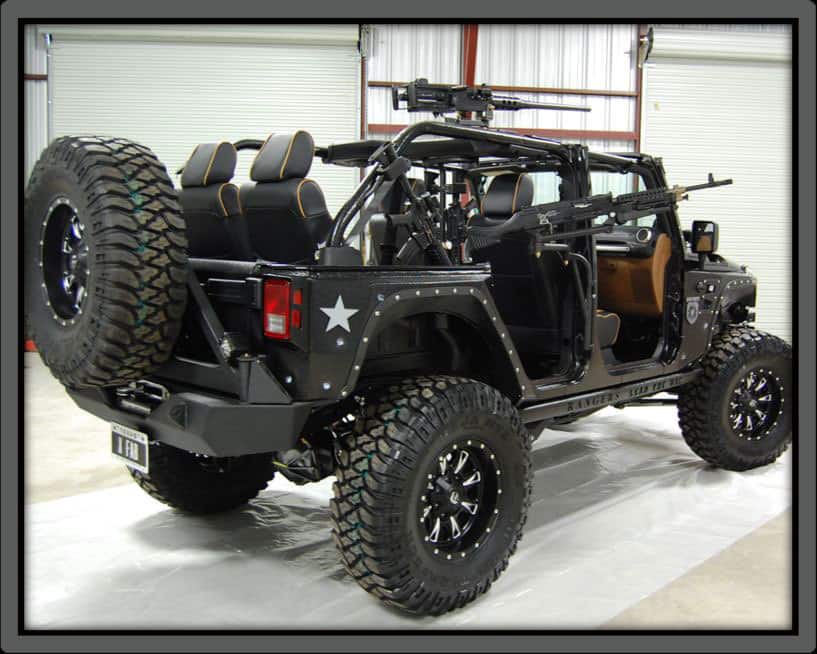
"Bro, do you even operate?" says the bumper sticker of a local tactical wanna-be type... on the back of his jacked-up, never-seen-mud, black tactical Jeep Wrangler Rubicon with all the subtlety of an M1 Abrams tank in a McDonald's drive-thru during lunch hour. Fortunately, he carries his cocked and locked .45 almost out of sight in a Serpa holster tucked under his black 5.11 shoot-me-first vest.

Now I probably shouldn't pick on folks and their lifestyle choices too much, because most would not likely make the choices the gals and I make, but when it comes to guns, prepping, and self-defense... I'm guessing there are a lot more of us average, non-operator types out there. I worked in law-enforcement for a few years a couple of decades back, but the gals and I have day jobs as educators that have nothing to law-enforcement, SWAT teams, security contractors, or operating in any way, shape, or form.


The gals and I are not going to be buggin' out with hundred-pound ALICE packs on forty-mile hikes anytime soon, but that doesn't mean that we want to give up our God-given rights, liberties, or freedoms.  With that in mind, we do like to budget some training, practice, and conditioning into our daily lives to help with self-defense and family protection needs.

I don't have four hours a day to lift, run, dry-fire, shoot, prep, hike, prepare food, read, study, train, and pay for it all.  Rather than just give up without even trying, I do try to spend some time every day and throughout the year, budgeting time and funds to train, practice, and condition to keep my EDC skills, abilities, and mindset on a slow and steady, but continuous pace of improvement.

Training is important and to me, that involves learning from others.  You need instruction from others with better or different knowledge to help you improve or modify your knowledge and skills. We try to combine efforts when possible like last year when the gals and I spent a three-day weekend together at TDI's Handgun Levels I, II, and III course as a family activity and mini-vacation. We do try to get to training at least two or three times each year... definitely at least one firearms training course... sometimes more, but sometimes it involves medical training or prepping-related training.


Sometimes my training is active and other times it is passive. I spend thirty minutes a day, three times each week, working out on a Schwinn Airdyne and often use that time to watch training DVDs or other shows and DVDs that increase my knowledge and improve my mindset. You can accomplish two things at once to save time and be more efficient in our busy lives. I then try to review and incorporate what I learn in my practice routines. I've watched some of our training DVDs several times each over the years, but don't think a DVD can completely replace the training and feedback of a live instructor... balance is the key.

Practice involves applying your training and becoming proficient with what you've learned. It doesn't necessarily take hours. Every day when I take my EDC gun, knife, and flashlight off at the end of the day... I practice for at least a few minutes. I empty and clear my gun... cycling the action and checking it three times to make sure it is empty.  I practice drawing and dry-firing five to ten times from concealment with a practice reload on the last draw and dry-fire using empty magazines.  On Sundays, I do everything with my off-hand. When I'm done, I reload my gun with ammunition, top off the magazine (you do top off your magazine, don't you?), and get it ready for use.

Fortunately, we have our own shootin' range out back and so at least a couple of times each week I can walk out and put a few rounds through my guns. I don't necessarily shoot a lot, maybe a magazine worth, maybe two or three magazines with two to six rounds in each to practice shooting and reloading with both my strong-side and weak-side. Maybe an occasional transition from my handgun to carbine and vice-versa since we keep both our 9mm's and AR's handy for home-defense work.  I also usually practice drawing and opening my EDC knife a few times with one hand and then the other hand each day.

Conditioning involves getting your body and mind in shape for practice and training. I'm not in great condition when compared to athletes and real operators. I've managed some significant weight-loss in recent years and hope to lose more, but for now my conditioning consists of taking this half-century old body to the gym for weight-lifting three days each week and spending thirty minutes on the Schwinn Airdyne three days each week. I realize that's not at Navy SEAL levels, but it's what I have time to work into my life with all my other commitments and I'm able to maintain it.

Integrating conditioning into other everyday life activities is important too. I exercise my hands and grip during my hour-long commute to work. I try not to park in the closest space to the door and be random in my parking and routines. Taking the stairs instead of the elevator is standard for me these days while walking for short trips rather than taking the car or truck is now the norm for me. I also practice several basic, physical self-defense moves three times each week to make sure they are ready when needed.

Preparing and conditioning for the proper mindset is also important. To condition my mind... I enjoy reading, studying, and visualizing. I can visualize every step and part involved with taking apart every single firearm we own in detail. I visualize threats and self-defense scenarios I've read about, seen on TV or Youtube (yeah, admit it... you watch the videos and dashcam vids on youtube too), and encounter in my every day life.

I try to think through each scenario to evaluate my awareness, preparedness, opportunities, capabilities, potential actions, and possible outcomes. I also try to reduce my daily stress and achieve some inner peace by conditioning my mind with some daily Bible reading and devotions. Maybe mediation or some other mind-relaxing technique works for you, but don't underestimate the harm and fatigue mental stress can cause you. Conditioning your mind is as important as conditioning your body.

So when it comes to training, practice, and conditioning... what are you willing or able to do? Are you overestimating your capabilities... most of us do. There is a reason our Bug Out Bags are kept at thirty-five pounds or less... because as Dirty Harry said, "A good man knows his limitations." I think it's also important to include your family and partners in your training, practice, and conditioning... at least as much as you can or as much as they are willing and able. Let's face it, the fastest reload you'll ever see breaking into my house is my redhead reload... that's when my gal continues steady fire into your center-mass while I reload.

I think the key is to do something... and I recommend starting and increasing incrementally. Chances are if you start next week trying to spend three hours each day when you're doing nothing now... you will fail. You will likely be better off committing fifteen minutes a day and gradually increasing your time... staying consistent and dedicated to an attainable goal, but that doesn't mean you shouldn't push yourself occasionally.

So, with all that being said... WHAT ARE YOUR THOUGHTS AND SUGGESTIONS about... Training, Practice, and Conditioning for those of us who don't operate...


Monday, January 27, 2014

My gals hate pink...

When I first met my wife back in the 80s... the days of shoulder pads... and not just for football players... stirrup pants, leg warmers, and big hair... like Barbara Mandrell... my gal was country when country wasn't cool. She's always worn a little make-up, but not much... and she's always had a natural beauty to her and a mind of her own... so she never really worried much about styles and trends.


She's as comfortable in jeans and camo as she is dressing up for a nice dinner out and about. She does enjoy the outdoors, shooting, and riding motorcycles, but still likes to kick back, throw on a movie... and paint her nails. A fiery redhead with sass, one thing I learned early on... pink is not this gal's color... it's purple.


Then came my lil' gal who's now off to college... and like her momma... she's her own woman too... in blue. Truthfully, I think either one would hate their favorite color if it was the norm... just because they don't like to be pegged in societal norms.  They both like to go their own way... intelligent, beautiful, independent gals with their own minds and their own ideas.

Anytime we're in a gun store or at one of the local dealers and one of the gun gurus on the other side of the counter is pushing a pink gun on some gal... or worse, some guy buying it for his gal... my wife is always about half ready to slap someone upside the head. Gals, I guess it's OK if you like pink, but my gals will have none of it.

Yeah guys, I know... a blue gun or a purple knife really doesn't blend in well while huntin'... but my gals remind me that animals are color-blind and that ninety-nine percent of the time we're not trying to evade the zombie apocalypse... but, honey... someday we might need to evade zombies and that purple... SMACK! She tells me that we'll camo it with Krylon when we have to... that's my gal!

Truthfully... black, camo, and molle gear doesn't really blend in with most environments that the majority of us encounter every day anyway. So... gun companies and others... a bright blue AR or a purple Ka-Bar TDI knife... not lavender or violet... but a real purple one (my wife's wish list)... would go well 'round here.

What can I say... My gals hate pink...

Monday, January 13, 2014

Getting into concealed carry, quick answers...

As a long-time gun enthusiast and firearms instructor, I have a lot of folks seek me out for advice. Some of the common questions I get about concealed carry include: "What gun should I carry?", "I want to get a gun and my CCW, what should I get or do?", "How much does a good concealed carry gun cost?", "What ammo should I get?", "How much does a CCW license cost?", "Do I need any training?"


As a firearms instructor, I work very hard to keep up on guns, gear, training, learning, trends, laws, products, pending legislation, skills... and so forth... which is why I usually take the approach when asked for advice of, "I educate, you decide."  That may be a good philosophy or approach for many, but learning can be expensive as you work your way through various guns, holsters, ammunition, training, and developing your skills and mindset.

With that in mind, I often still get folks trying to pin me down to tell them exactly what they need and how much it will cost. So here are my thoughts for one-size fits a lot of folks at the beginning of owning a hand gun and wanting to carry concealed that fits a lot of the time.


We should start with why you want to carry a concealed gun and what your current mindset is, but instead we'll start with the question that most folks want answered first... What gun should I get? All things being equal (which they are not), I typically recommend a 9mm semi-auto from a major, reputable manufacturer and you should plan to spend $400 to $600 with tax, etc.


I'm not going to debate caliber here. New shooters are still developing skills and the lower cost of 9mm ammunition for practice, the lower recoil than comparably sized guns in .40S&W and .45ACP, and the higher capacity for a similar sized gun make the 9mm a great choice for a first gun that someone has decided to carry, develop skills, and bet their life on.  Leave the snubby .38s to the gun-counter guru's tryin' to impress gals with bad advice.


Three guns I personally like are the S&W M&P9 Compact, the Glock 19, and the Ruger SR9c.  These three guns are in the price range I mentioned, are smaller than their full-size counter-parts, have good capacity, can use an extended magazine to provide a full-size grip for new shooters... and while smaller, they have enough size, heft, and sight radius (the distance between the front and rear sights) to make for effective grip, recoil control, training, and skill development while still being very concealable for a lot of folks. I also recommend that you have at least three magazines for your gun... while I personally have a minimum of six magazines for any gun the gals or I own.

You should ideally carry the gun holstered on you, so you will need a holster and that can be quite a journey in itself if you ever get a chance to see my multiple holster boxes.  Let's make this simple... get a quality, inside the waistband (IWB) holster to carry on your strong-side hip. Kydex, leather, or a hybrid Kydex-leather holster specific to your gun from a reputable manufacturer will run you about $100 with tax or shipping thrown in. I think outside the waistband (OWB) holsters are harder to conceal and you should have some experience built up before going to appendix carry... ankle hosters are not a good primary carry location... and leave the shoulder holsters for cop-show re-runs from the 70s and 80s.

My personal preference is a hybrid IWB holster with good quality leather against me from manufactures like Comp-Tac, Galco, Cross-Breed, or Blade-Tech. The Kydex half of the holster will keep it's shape, allow you to adjust tension/retention, and hold it's opening for re-holstering. They usually have two good clips, like my Comp-Tac MTAC, instead of one to hold the holster in place on your belt/waist when drawing or re-holstering your gun.  You can probably throw in $25 to $50 for an spare magazine carrier and another $50 to $75 for a quality belt or belt designed specifically for concealed carry.


When it comes to ammunition, stick with major-brand bulk boxes of 9mm, 115 grain FMJ for practice and then select a major-brand defensive round like Winchester PDX, Federal Hydra-Shok, Speer Gold-Dot, Hornady Critical Defense, or other similar cartridge. Again, I'm not going to debate specifics right now because this advice is for folks who don't want an education, just an answer. How much will it cost... see my thoughts on Handgun Break-In for Self-Defense, which is as much about breaking in the gun as it is about breaking in the shooter.


OK, so now you've got your gun, holster, and ammo... lets go over what you should have taken care of first... mindset, legalities, and training. Do you have the proper mindset? Are you ready to take on the responsibility and cost... both emotional and financial, of carrying a firearm for your defense. Are you ready to take the life of another in the process of stopping their immediate aggression or threat or serious harm or death against your life? Your family's lives? Your friends' lives? Strangers lives?  Where do you draw the line? Family but not friends? Friends but not strangers?


What about the law, legalities, and liability of carrying a concealed gun in your state or area? Do you need a CCW license in your state? Do you know how much it costs? Do you know where you can and where you can't carry? Do you know the law? Is training required? Are familiar with the legalities of self-defense and the use of deadly force? Can accept the liability for your actions with a concealed gun for self-defense? My personal answer to all of these is yes... but what about you? 

Finally, let's end with the beginning... training. As a firearms instructor for many years and a professional educator... I believe that learning and training is essential to every endeavor in life... especially for the safe use and carrying of a concealed handgun. Before you even by the gun, the holster, the ammo... start with training! Seek out quality instruction in your area. If you are just beginning, an NRA Basic Pistol Course is a terrific place to start. 


If you know the basics, then get quality training from a local, regional, or national trainer or program with a solid reputation of training folks AT YOUR LEVEL! Tactical-operator-door-kicker training is probably not the place to get your first training under your belt as a new gun owner or concealed carry licensee. 

Good training isn't cheap so plan to spend $100 to $200 (including ammo) for an NRA Basic Course or $300 to $700 between the ammo and cost of the instruction for a higher skill-level course that addresses techniques, tactics, and mindset. Look around, there's probably good instruction locally or regionally you can take advantage of to begin your journey.

So, you can do this on the cheap... or you can do it right... but you better budget $1,000 to $1,500 for your first year as a new gun-owner and CCW licensee. If you have any thoughts, feel free to add your two-cents worth... about... Getting into concealed carry, quick answers......